Cybercrime Documentary: The Dark Web Uncovered | What the Hidden Internet Really Powers
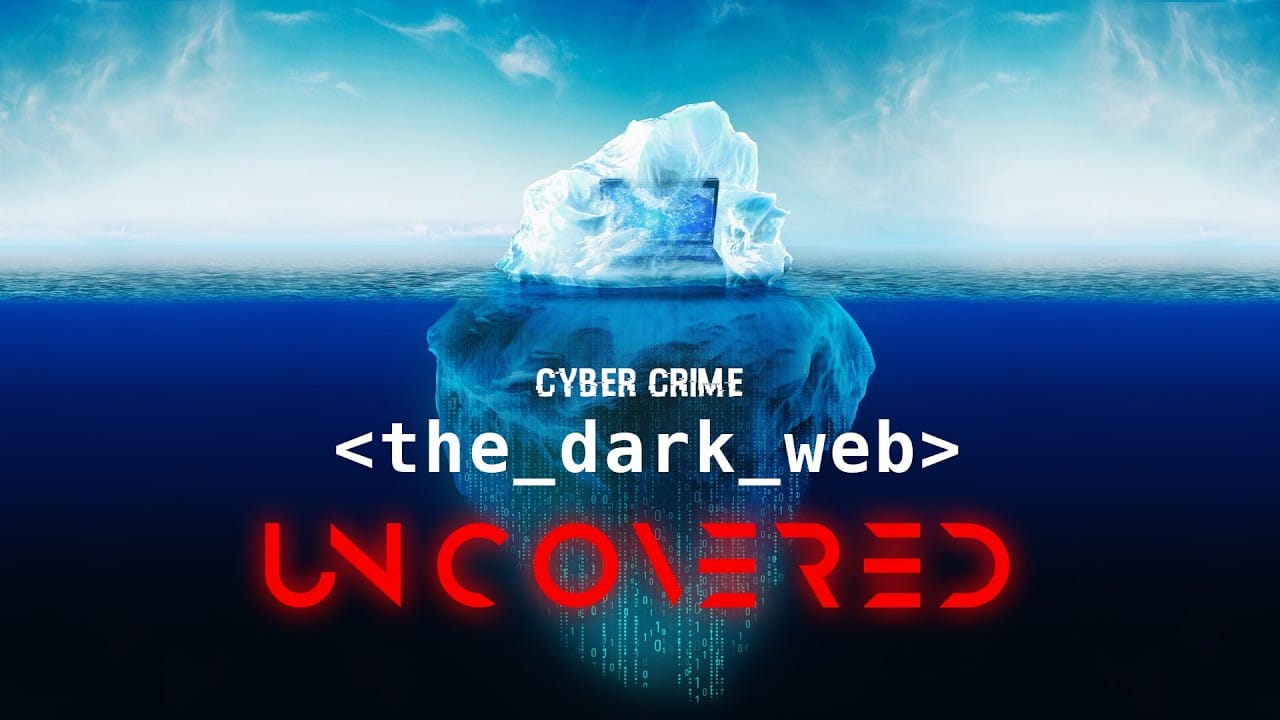
The dark web is still misunderstood by a lot of people. Some treat it like a digital myth. Others reduce it to a spooky corner of the internet where “hackers hang out.” Neither view is useful.
The reality is more serious: the dark web is part of the infrastructure that helps modern cybercrime scale. It is where stolen data gets traded, where access gets resold, where phishing kits and malware services get packaged for reuse, and where criminal operations find the anonymity and reach they need to keep moving.
That is the focus of LufSec’s new documentary, Cybercrime Documentary: The Dark Web Uncovered | Inside the Hidden Internet. The film is not really about internet mystery. It is about criminal economics, attack enablement, and the systems that turn one breach into thousands of downstream victims.
The dark web is not the whole internet — but it matters because it concentrates risk
A useful starting point is this: the dark web is not the same thing as the broader internet. It is a smaller hidden segment accessed through specialized tools and privacy-focused routing, and it has legitimate uses in some cases. Journalists, dissidents, investigators, and privacy-conscious users may all have reasons to use anonymity-preserving technologies.
But the reason cybersecurity professionals care so much about it is simple: criminal activity concentrates there. That is where anonymity, reputation systems, escrow models, and underground forums can work together to support a functioning illicit market.
That changes the way cybercrime works. Instead of every attacker needing to build everything from scratch, the dark web helps create a supply chain. One actor steals credentials. Another sells access. Another bundles phishing templates. Another runs ransomware operations. Another launders proceeds through crypto workflows. The attack ecosystem becomes modular.
What the documentary shows clearly
The documentary’s most important contribution is that it frames cybercrime as an ecosystem, not a collection of isolated incidents.
That matters because many businesses still think about attacks as one-off events: one phishing email, one malware infection, one ransomware demand, one fraud attempt. In practice, those events are often linked to a broader market.
A leaked credential is not just a leaked credential. It can become an initial access sale. A successful phishing campaign can become a foothold for ransomware. A breached database can become fuel for identity fraud, business email compromise, targeted extortion, and follow-on intrusion attempts.
The dark web helps connect those pieces.
That is why the documentary spends time on stolen data markets, ransomware crews, phishing kits, and cybercriminal business models. Those are not side stories. They are the operating system of large-scale digital crime.
Why ransomware and phishing are still winning
One of the strongest themes in the documentary is that many cyberattacks still succeed through surprisingly repeatable paths.
Phishing still works because humans are still the easiest path into many environments. Credential reuse still works because too many users and organizations still do it. Weak monitoring still gives attackers time to move quietly before the visible damage begins. And ransomware still lands because many organizations still do not have strong enough segmentation, recovery planning, or tested backup discipline.
This is one reason the dark web matters so much. It lowers the barrier to entry for less-skilled attackers. Someone no longer needs deep technical skill to cause harm if they can buy the kit, rent the infrastructure, copy the lure, and follow the playbook.
That professionalization is what makes modern cybercrime so dangerous. Criminal operations have become more organized, more service-driven, and more scalable.
What defenders should take away from it
If there is one practical lesson from the documentary, it is this: cybersecurity is not just a tooling problem. It is an exposure-management problem.
Organizations need to think in layers.
- Reduce credential risk with strong unique passwords and multifactor authentication.
- Treat phishing resistance as an ongoing training and process problem, not a one-time awareness slide.
- Monitor for exposed credentials and leaked assets where possible.
- Maintain tested backups and incident response plans before a crisis hits.
- Assume that if data is exposed once, it may keep creating risk long after the original breach.
- Treat ransomware as a business continuity problem, not only a malware problem.
For individuals, the basics still matter more than most people want to admit: use a password manager, enable MFA, freeze credit when appropriate, and stop reusing credentials across services.
For businesses, the bigger lesson is governance. Someone has to own the risk. Security cannot sit as a side function while the organization keeps expanding its exposure faster than it improves its controls.
If you have not watched the documentary yet, start here: Cybercrime Documentary: The Dark Web Uncovered | Inside the Hidden Internet.
For additional defensive guidance, CISA’s Stop Ransomware resources and the FBI IC3 Annual Reports are both worth reviewing alongside the film.
If you want more operator-grade cybersecurity content from LufSec, join the newsletter, subscribe on YouTube, and explore the training catalog starting with Prompt Hacking for LLMs Intro.