Modern Car Theft: 4 Vehicle Attack Paths Security Teams Still Miss
Modern Car Theft: 4 Vehicle Attack Paths Security Teams Still Miss
As summer driving season gets closer, most people still picture vehicle hacking the wrong way.
They imagine one dramatic remote exploit, one genius attacker, and one cinematic moment where a car gets “hacked.” But that picture is outdated. In practice, modern car theft and vehicle compromise are usually trust problems first.
The real question is not whether a vehicle contains software. Of course it does. The question is where the vehicle, the backend, or the surrounding ecosystem trusts something it should verify more aggressively.
That matters for manufacturers, security teams, fleet operators, and even drivers trying to understand how vehicle risk has changed. If you focus only on one exotic exploit path, you miss the repeatable attack surfaces that actually matter.
Here are four of the most important vehicle attack paths teams still underestimate.
1) Wireless entry systems still create easy trust mistakes
Keyless entry made life easier for drivers, but it also expanded the number of signals a vehicle is willing to trust.
In many real-world attacks, the attacker does not need to “break the whole car.” They only need to abuse the trust model around proximity, signal relay, or message acceptance. If the system assumes a legitimate key must be nearby because a signal looks right, that assumption can become the weakness.
This is one reason modern car theft often looks less like sophisticated malware and more like exploiting convenience features that were never designed for hostile use.
2) Telematics turns vehicle security into an app and cloud problem
The moment a vehicle depends on mobile apps, cloud dashboards, remote commands, and account recovery flows, the attack surface extends far beyond the car itself.
A weak login flow, broken authorization rule, exposed API path, or poor account recovery process can become a real vehicle risk. That is why connected car security cannot be treated as a problem that lives only inside the ECU stack.
Security teams that separate “vehicle security” from “backend and mobile security” usually create blind spots attackers can exploit.
3) Internal vehicle networks still trust too much
Once an attacker reaches an internal network, the problem changes fast.
At that point, the key question is not “are they inside?” It becomes “what will other components believe?” If ECUs accept messages with too little validation, then internal access becomes a multiplier. A single foothold can turn into command injection across functions that were supposed to trust only legitimate modules.
That is one reason CAN-related risk is still so important. The issue is not just access to the bus. The issue is that trust inside the bus is often too cheap.
4) OTA and service paths can become persistence paths
Over-the-air updates, maintenance workflows, and diagnostic interfaces are valuable features. They also create powerful trust channels.
If update integrity, rollback protection, signing workflows, or service access controls are weak, those pathways can become long-term control points. Even when firmware protections are strong, the broader update and service ecosystem can still expose the vehicle.
This is exactly why regulators and industry guidance continue to stress cybersecurity engineering across the full vehicle lifecycle, not just a single embedded component. NHTSA’s guidance on the Cybersecurity Best Practices for the Safety of Modern Vehicles is still a useful reference point here: Cybersecurity Best Practices for the Safety of Modern Vehicles
The real lesson
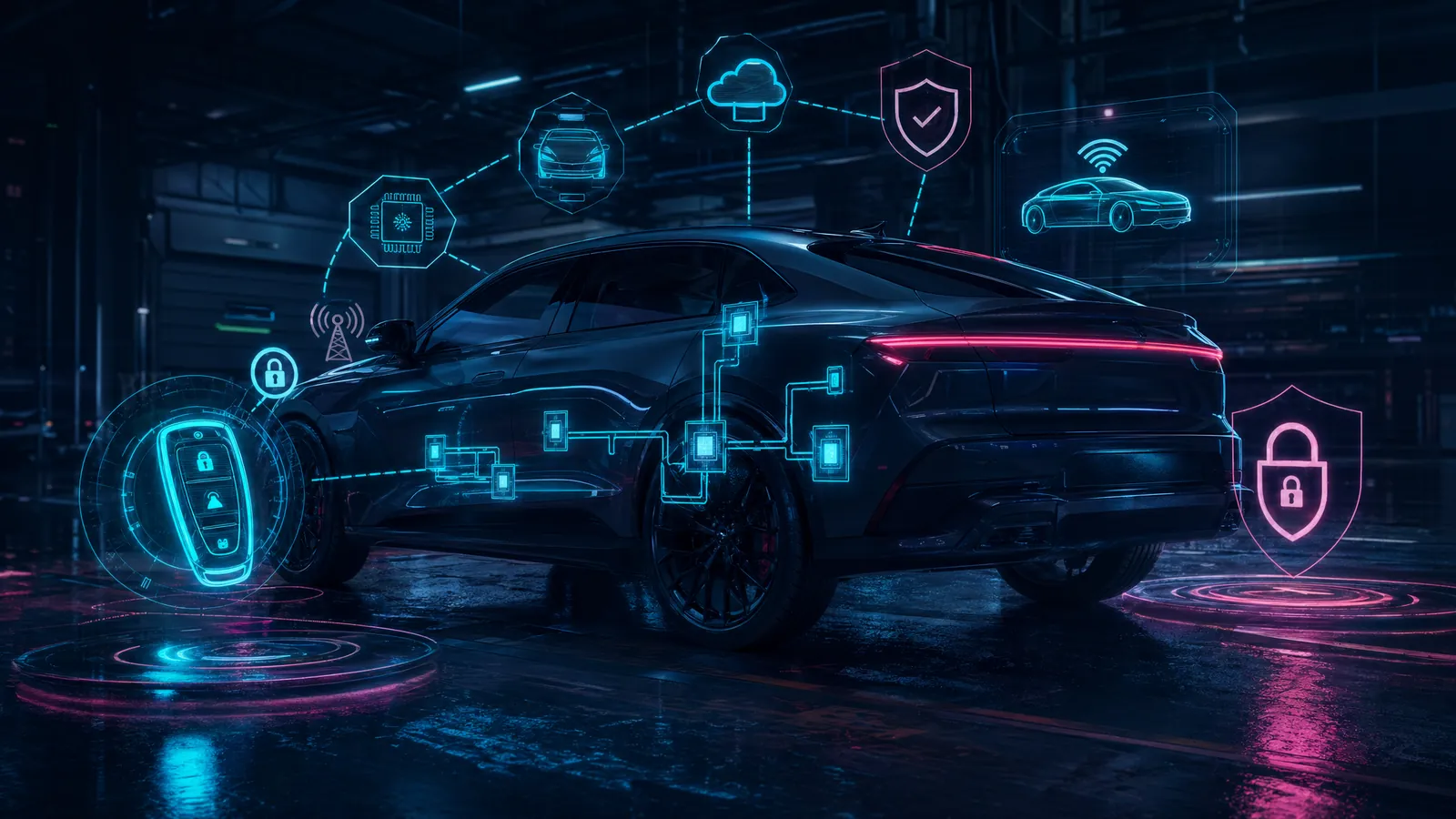
Modern cars are not only “computers on wheels.” They are trust systems on wheels.
The strongest teams do not just ask whether an exploit is possible. They map where trust is granted, how that trust is validated, and what happens if one layer fails. That mindset is far more useful than chasing only the most dramatic exploit demo.
If you want the practical side of vehicle attack surfaces, message trust, telematics risk, and how these paths actually get abused, start here with the LufSec Car Hacking course.
And if you want the shorter breakdown in video form, follow LufSec on YouTube.