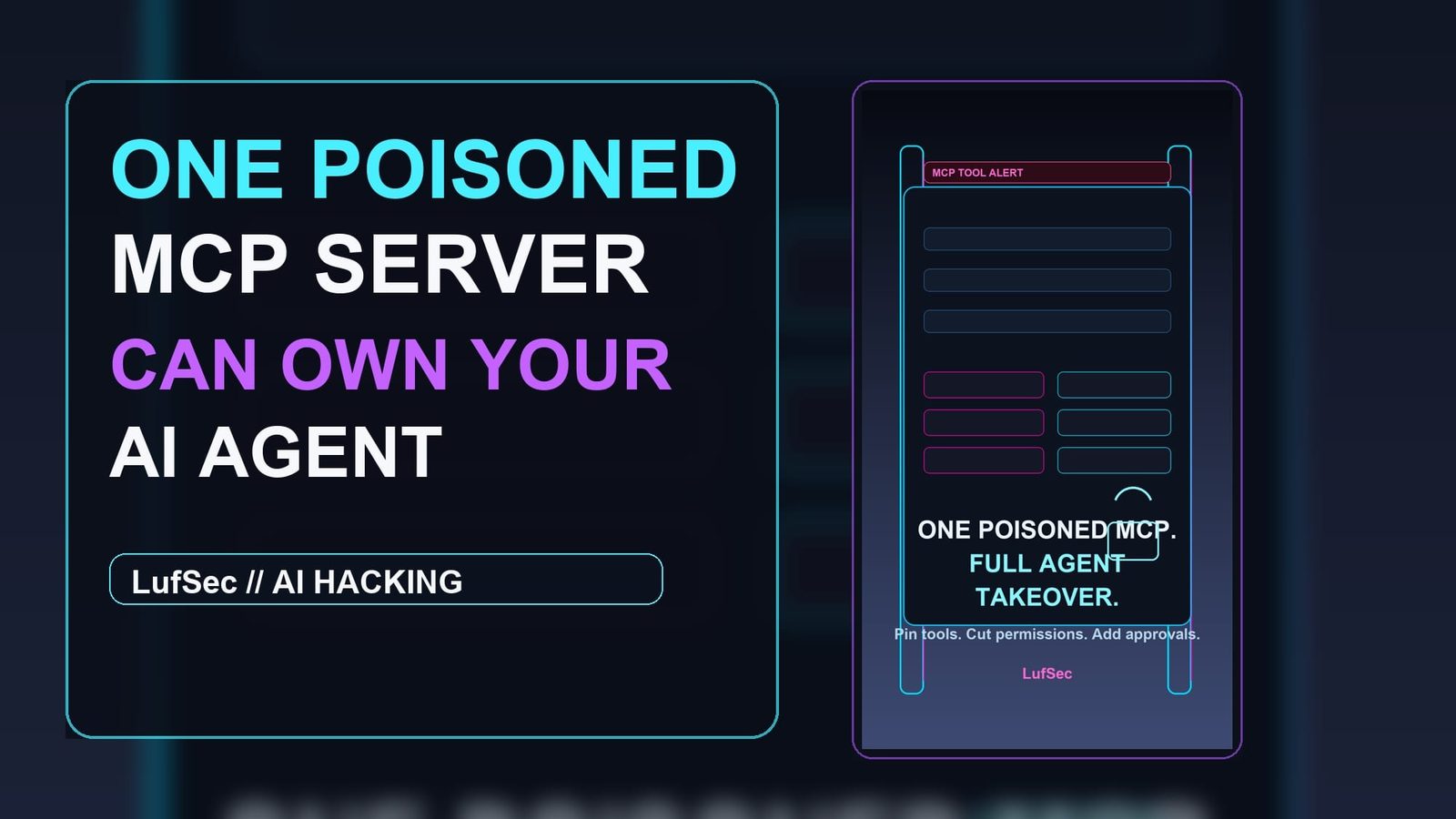
Your AI Agent Can Be Hijacked by a Pull Request Comment
Your AI Agent Can Be Hijacked by a Pull Request Comment
A lot of teams still talk about prompt injection like it is a weird chatbot edge case. That framing is already outdated. When an AI system can read untrusted content and then use tools, secrets, or workflows, prompt injection becomes an operational security problem.
That matters right now because real-world agent abuse is no longer hypothetical. The recent Comment and Control disclosure showed AI coding agents leaking secrets after ingesting attacker-controlled instructions in GitHub workflow context, and Google’s April 2026 threat analysis on prompt injections in the wild reinforces the same lesson: once external content reaches an agent, you need layered controls around trust boundaries, privileges, and actions.
The real mistake teams keep making
The failure is not only that the model followed the wrong instruction. The deeper failure is that untrusted text is often allowed to sit in the same execution path as trusted instructions.
If your agent can read a pull request title, issue comment, PDF, email, knowledge-base page, or scraped website, then an attacker may not need to break your system prompt at all. They only need to place malicious instructions where your agent will consume them.
That is why defenses that focus only on better prompting are weak on their own. The stronger approach is system design.
Five checks to run before you ship an AI agent
1. Separate trusted instructions from untrusted content
Do not let your agent treat third-party text like first-party authority. Use explicit delimiters, provenance markers, and isolated processing paths so the model can distinguish data it should analyze from instructions it should obey.
2. Cut tool permissions harder than feels comfortable
If an agent does not need shell access, repo write access, payment actions, or production secrets for a task, do not grant them. Prompt injection gets expensive only when the blast radius is large.
3. Put approval gates in front of risky actions
High-impact actions should require confirmation, secondary checks, or human review. Tool use without approval is how text manipulation turns into operational damage.
4. Verify outputs before downstream systems trust them
Treat tool calls, generated plans, and extracted data as untrusted until checked. Validation logic, policy checks, and logging at action boundaries matter more than polished prompt wording.
5. Red-team the workflow, not just the model
Test the whole chain: retrieval, prompt assembly, tool use, memory, approvals, and post-processing. Benchmarks and field reports keep showing the same thing: the risky surface lives in the workflow around the model.
What this means for builders right now
If you are building agents for engineering, research, internal copilots, or customer operations, your security posture is no longer just about model quality. It is about whether your system can keep untrusted content from gaining authority.
If you want the attacker mindset, the defense patterns, and a cleaner way to evaluate real prompt-injection risk, start with LufSec’s Introduction to Prompt Hacking for LLMs. If you are ready for the deeper technical path, the next step is AI Hacking: Secure Large Language Models.
And if you want more practical AI security breakdowns like this in your inbox, join the newsletter at LufSec and subscribe on YouTube.