Prompt Injection Is a Trust-Boundary Failure, Not Just an LLM Bug

Prompt Injection Is a Trust-Boundary Failure, Not Just an LLM Bug
A lot of teams still talk about prompt injection as if it were mainly a model-behavior problem.
That framing is too narrow.
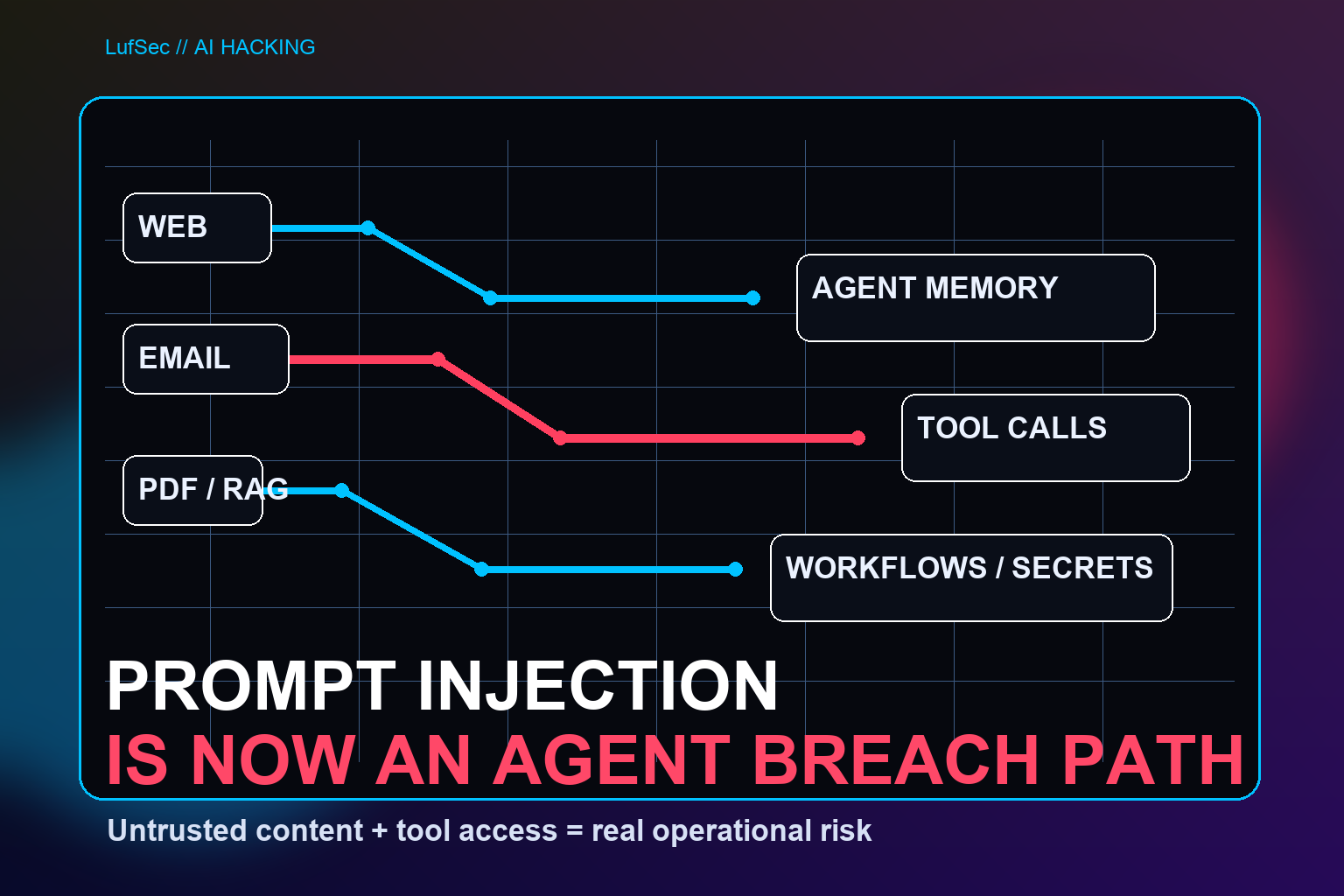
In practice, prompt injection is usually a trust-boundary failure. The model matters, but the bigger issue is that systems often let untrusted text flow too far with too much authority.
If an LLM can read external content, reason over it, and trigger tools or workflows, then webpages, documents, emails, tickets, database fields, and RAG context can all become attack surfaces. At that point, the question is not only whether the model can be manipulated. The bigger question is what the surrounding system allows the model to do after manipulation.
Why this framing matters
When teams treat prompt injection like a weird prompting edge case, they usually reach for weak defenses:
- longer system prompts
- vague refusal instructions
- brittle keyword blocks
- model swaps without architectural changes
Those steps may help at the margin, but they do not solve the real problem.
If the issue is trust, the defenses need to be structural.
What stronger defenses actually look like
1) Separate trusted and untrusted context
Do not blend outside content into high-authority instructions without clear boundaries.
2) Restrict tool power
Agents should not have broad write, send, purchase, or delete capability by default.
3) Validate outputs before actions
Treat model outputs like unsafe intermediate material, not final authority.
4) Add approval gates for high-risk steps
Human review still matters when workflows touch money, credentials, production systems, or customer data.
5) Log and trace what happened
If an agent fails, you need receipts: what it read, what it decided, and what it tried to do.
The commercial reality
This matters because AI systems are moving fast from chat interfaces into real operational workflows.
The moment an agent can interact with tools, sensitive data, or business processes, security becomes part of the product. Teams that ignore that will end up shipping fragile automation with hidden trust failures inside it.
Teams that design for adversarial conditions early will move slower for a week and faster for the next year.
For a deeper practical breakdown of prompt injection, agent abuse, and how to defend real systems, start here with the LufSec AI Hacking course.
Reference: MalTool: Malicious Tool Attacks on LLM Agents
Also, subscribe for new breakdowns on LufSec on YouTube.